Others will love what I loved
Presentation
Produções da Avó

A FEATURE-FILM WRITTEN AND DIRECTED BY Raul Veiga WITH Francisca Sobrinho, Tiago Araújo AND Xosé Barato

Others will love what I loved

Our grandma lived as if writing, she made each day a story without end.

This feature film is a miracle come true. We can say this without any doubt, after having overcome all the obstacles that arise from not being able to count on the usual sources of financial support. It’s obviously an “author” film (the director Raul Veiga also wrote the script), but it never forgets the first function of every artistic creation: to be, in classical words, a promise of pleasure.

The filming was done in the Portuguese and Galician language, set in the North of Portugal (the Ponte de Lima area, namely at Casa de Vilar de Rei, the film’s main location) with several scenes in Galicia (Vigo, Northwest Spain). It was followed by a long post-production and now we can present a very original film, excellently-made in artistic and technical terms.

I · Synopsis
Others will love what I loved
Produções da Avó
Happiness isn’t anaesthesia.

Two siblings. A country house in North Portugal. An inheritance that’s a challenge too.

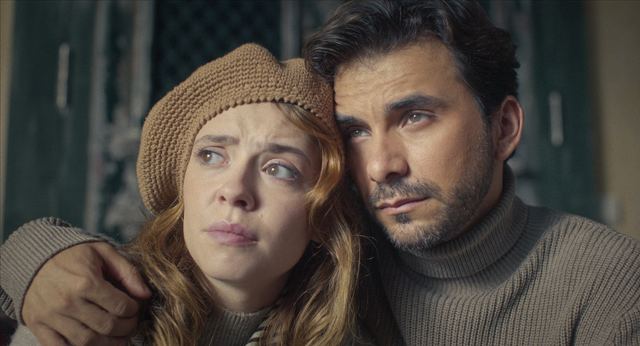
Twins around thirty years old, Mafalda and Diego, after many years without any contact with their grandmother Pilar because of a family dispute, inherit her family home in Portugal, along with a surprising request.

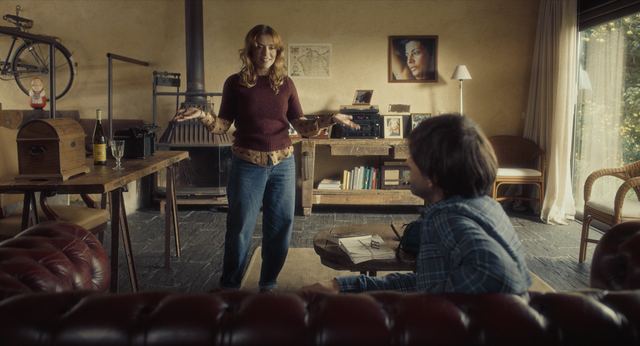
Trying to fulfil her challenge, the twins move to the house and there they discover what their grandma’s love really meant. They must find out who they are and what they want to do with their lives, their future and their desires.

Will they succeed?

II · The story
Others will love what I loved
Director’s statement

Others will love what I loved

Everyone has a grandmother or grandfather in their hearts, just as everyone has a family, the source of emotions that truly leave their mark and, therefore, the scene of conflicts and rifts of varying degrees of depth.

Thus, twins Mafalda and Diego, after a long time without contact with their grandmother Pilar, are surprised when her executor calls them to deliver their inheritance, a country house in Portugal and some money, but with a shocking condition: they must use the money to free themselves from work and so have time to create a story that perpetuates the family memory, since Mafalda, like her grandmother, has always been a great storyteller – a theme with a long tradition: women as carriers of memory.

A sibling relationship unlike any other in the history of cinema

Mafalda goes one step further and decides to make the story into a film. However, to carry out this plan, the siblings will have to rethink their lives, with the help of Mafalda’s partner, Ricardo, while they struggle, in Galicia and Portugal, to overcome the enormous obstacles that film production entails for outsiders like them.

For Mafalda and Diego, in their attempt to remain faithful to Pilar’s wishes, it is not just a matter of healing the wound left by the family breakdown following the accidental death of their father; it is, above all, about rediscovering their grandmother’s lost memories, now recovered through Domingos Martins (a friend of Pilar’s who was secretly in love with her), and, in the end, giving her the only permanence possible, bringing her into the lives of Mafalda and Diego.

This film is about the many paths of love: the love of those who came before us and gave us life, the love of siblings, the love of lovers, and how all of them, through the family, form the basis and foundation of any community. Hence the significance their grandmother’s house acquires for them, to the point of putting down roots there and making it their own, as Pilar wished.

Love, identity, memory

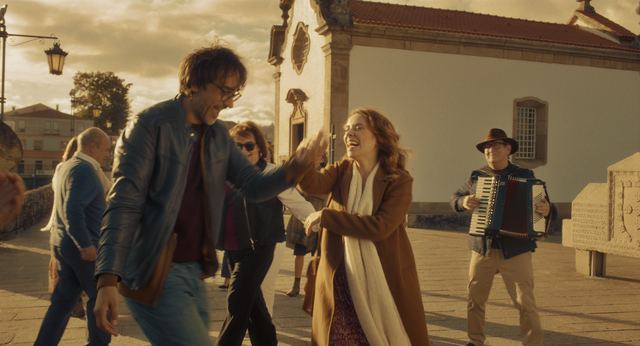
In addition to being an ode to family, Others will love what I loved is an ode to Portugal and Galicia, because our characters’ odyssey raises questions of identity, both individual and collective, and of memory, both personal and social. The English title of the film expresses this well: loving what our ancestors have passed on to us, a home, a land with enormous appeal, a language (the Galician language, which is trying to survive its centuries-old marginalisation) and also the charm of the small differences that enrich our identity, such as, in this case, the relationship between Portugal and Galicia.

A lively and luminous narrative

To bring this dramatic comedy to life, it was essential to have a cast capable of turning the characters into living beings and Raúl Veiga’s main mission was to direct them in such a way that the film would move the audience. We had a group of excellent Portuguese and Galician actors: Francisca Sobrinho (“Mafalda”), Tiago Araújo (“Diego”) and Xosé Barato (“Ricardo”), to name just the protagonists. On the technical team, we must highlight the names of the director’s regular collaborators, Juan Carlos Gómez (more than a hundred credits on IMDB) in cinematography and Guillermo Represa (also a lot of credits on IMDB) in editing, with a special mention for Paulo Pires’ music.

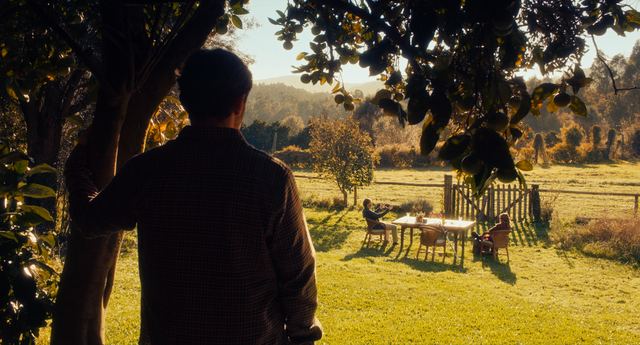
The colour palette of the locations (creation of Jorge Lourenço) and costumes (by Ana Isabel Nogueira) intensely convey the presence of autumn and the beautiful Ponte de Lima, and, in general, the landscape of the Miño region is the backdrop against which Mafalda, Diego and Ricardo, under the benevolent gaze of Domingos Martins, try to find the path to their freedom, in a lively and luminous narrative that leads to a surprising ending.


III · Gallery
Images from the film
IV · Cast&Crew
Others will love what I loved
Produções da Avó

The Filmmakers

Genre
Dramatic comedy
Image
Colour, 1:1,85, 4K
Sound
5.1
Duration
97 min.
Language of the film
Portuguese, Galician
Subtitles
Spanish, English, French
Filming locations
Navió (Casa de Vilar de Rei)Ponte de Lima (Portugal)Vigo (Galicia, Spain)
Ages
12 and over
Supported by
Adega Cooperativa Regional de Monção Câmara Municipal de Ponte de Lima
Also supported by
Eben Studio Production Solares de Portugal

Cast

MafaldaFrancisca Sobrinho
DiegoTiago Araújo
RicardoXosé Barato
Domingos MartinsAntónio Capelo
Paulo CondeJoão Cardoso
EmíliaMaría Barcala
RaulArtur Trillo
Matilde, the motherIsabel Vallejo
Matias, the secretaryManu Fernández
Grandmother’s voiceElena Seijo

Crew

DirectorRaul Veiga
ProducerManuel Mexuto
ScriptRaul Veiga
Line producerMarta Lima
Production managerSara Marques
CinematographerJuan Carlos GómezAEC
Art directorJorge Lourenço
WardrobeAna Isabel Nogueira
SoundMarta Mota|Sérgio Silva
Make-up and hairMarta Ramalho
EditorsGuillermo Represa|Pedro M. Afonso
MusicPaulo Pires
V · Director / Producer
Raul Veiga
Biofilmography
Raul Veiga

Filmography

  • 2026Others will love what I loved
  • 2018Told by Rosalia (script)
  • 2014The attentive doctor
  • 1999The wheel of fire
  • 1994Midlife
  • 1989Continental (script)
  • 1984Pure poison (script)

Raul Veigapseudonym of Manuel Castelao Mexuto

He is a Galician-born movie director and scriptwriter, living in Portugal. It’s not easy to summarise a career spanning several decades, but after a youthful period involved in non-professional filmmaking, film clubs and journalistic work, he gained recognition when he wrote the much-talked-about video Veneno puro [Pure poison] (1984, winner of several international awards).

He went on to the big screen with the feature film script Continental (1989), now a cult film, where he also worked as a writer during filming and post-production. The film’s screenplay, along with the material prepared by the author for the cast, was published in 1991.

He worked as assistant director in 1990-91 and began directing his own scripts from A metade da vida [Midlife, 1994] on, the only full-feature film produced in Galician language and with Galician cast in the leading roles during the nineties. The film was selected for many international festivals and arrived to its final form in the restored and updated edition of its XXV anniversary (2019).

Arde amor [The Wheel of Fire, 1999] was his second feature film as producer, director and screenwriter and it received many awards, two of them in USA festivals. Raul Veiga has also worked as a movie critic and in film analysis, work reflected by the essays collected in his book Esta noite no cinema [Cinema Tonight], 2005, finalist in the essay AELGA award.

He was a jury member in film festivals, wrote reports on the feasibility of adapting literary works for film and developed educational activities related to his areas of expertise in Portugal and Spain. The documentary El médico atento [The Attentive Doctor, 2014] is his former feature film and includes the dramatisation of several clinical cases. His last work as scriptwriter was for the TV-movie Contou Rosalía [“Told by Rosalia”, 2018], based on the work and life of the Galician writer Rosalía de Castro.

The long awaited A avó e o amor [Others will love what I loved, 2026], a Portuguese production, is his latest feature film as director and screenwriter.

For more information about other aspects of the director/producer’s career, see Wikipedia.

Others will love what I loved
Contacts
Produções da Avó